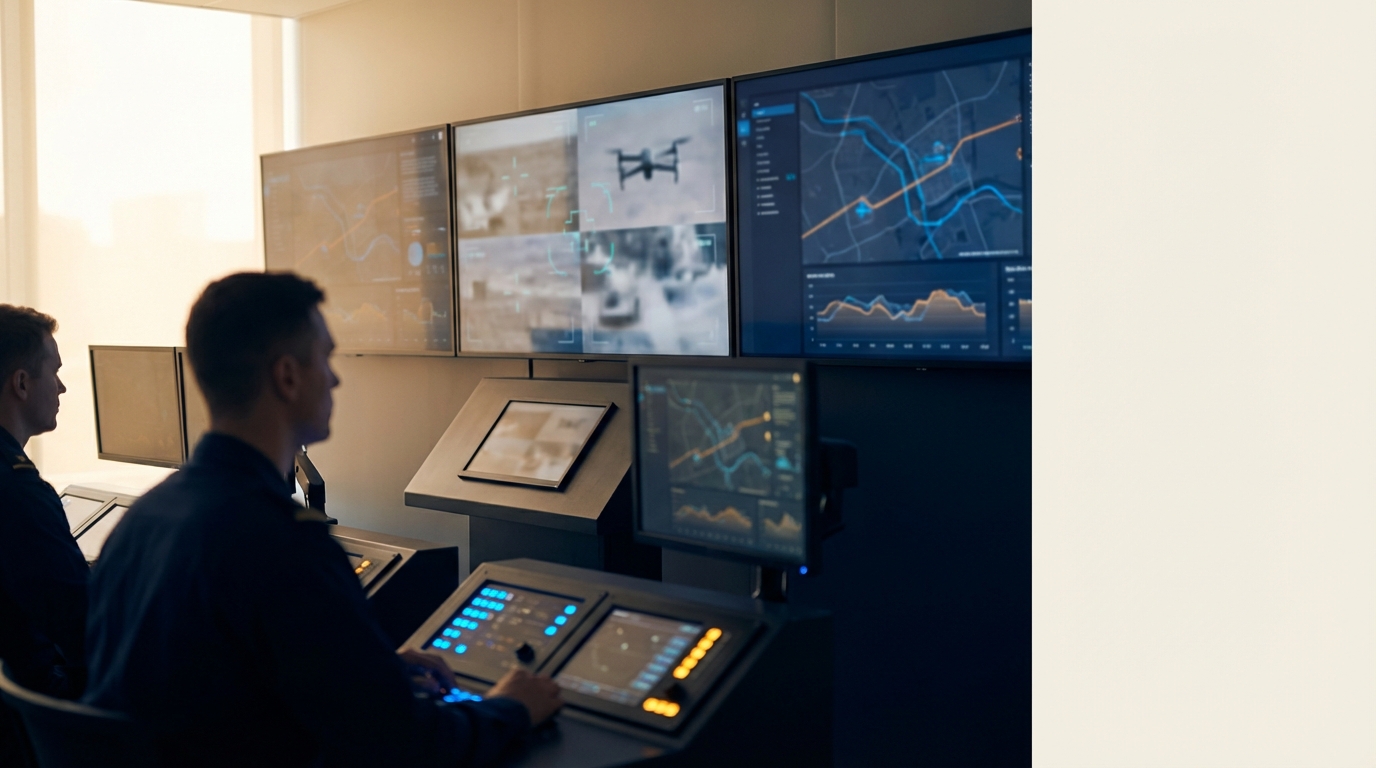
Modern warfare has entered a new era. AI systems are no longer just supporting military operations: they're fundamentally changing how combat unfolds. From target identification to strike execution, artificial intelligence is accelerating the "kill chain" at speeds that were unimaginable just a few years ago.
The implications are staggering. We're witnessing the emergence of military AI that can process battlefield data, identify threats, and recommend weapons faster than human operators ever could. This isn't science fiction anymore. It's happening right now, reshaping conflicts around the globe.
The New Military AI Landscape
Project Maven: AI in the Kill Chain
The Pentagon's Project Maven represents one of the most significant developments in military AI. According to recent reports, this system relies heavily on technology from Palantir and incorporates Anthropic's Claude AI model. The system has been deployed in operations involving thousands of targets, demonstrating the scale at which AI military systems now operate.
The "kill chain": the process from target identification to strike execution: has been dramatically accelerated. What once took hours or days can now happen in minutes or even seconds. This compression of decision-making timeframes represents a fundamental shift in how modern warfare operates.
AI Integration Across Military Operations
Military AI systems in 2026 are expected to be deeply integrated into the "digital backbone" of operations. According to industry analysis, these systems are projected to:
- Reduce data redundancy by 45-55%
- Improve coordination by 35-40%
- Accelerate intelligence analysis by orders of magnitude
- Enable real-time battlefield decision making
These improvements aren't just incremental upgrades. They represent a qualitative change in military capabilities that's forcing nations to reconsider their defense strategies entirely.
The Technology Behind Military AI
Autonomous Weapon Platforms
Unmanned Aerial Vehicles (UAVs) have evolved far beyond simple reconnaissance tools. Today's military drones are sophisticated weapons platforms powered by AI systems that can:
- Identify and classify targets using computer vision
- Navigate complex environments autonomously
- Coordinate with other systems in real-time
- Execute missions with minimal human oversight
Companies like Scout AI are developing systems they envision will enable "massive unmanned system on unmanned system warfare." According to their executives, future conflicts may be decided by autonomous systems fighting each other, with human forces kept safely away from direct combat.
The Economics of AI Warfare
The cost dynamics are compelling. Some military AI companies project that once production scales reach half a million units, individual autonomous systems could cost less than $20,000 each. This economic reality makes swarm tactics feasible: deploying thousands of AI-powered systems simultaneously.
These swarms could conduct complex military operations that would be impossible for human operators to coordinate effectively. The sheer scale and coordination capabilities represent a new category of military threat and opportunity.
Real-World Deployments and Impact
Current Operations
AI military systems are not theoretical. They're actively deployed in current conflicts. Recent operations have demonstrated AI's ability to:
- Process massive intelligence datasets faster than human analysts
- Identify patterns and threats that humans might miss
- Coordinate multi-platform operations in real-time
- Accelerate targeting decisions dramatically
Israel has deployed similar AI targeting programs across multiple theaters, including Gaza and Lebanon. These systems demonstrate how AI can maintain operational tempo that would be impossible with purely human-operated systems.
Spectrum Dominance and Counter-Systems
Military investment in 2026 focuses heavily on:
- Spectrum dominance: Controlling electromagnetic warfare through AI
- Counter-drone systems: AI-powered defenses against autonomous threats
- Immersive training: AI-enhanced simulation and preparation
- Energy-efficient infrastructure: Supporting AI systems in field conditions
These investments show how AI military systems require entire ecosystems of supporting technology to be effective.
The Corporate-Military Integration
Defense Contractors vs. AI Companies
A critical shift is happening in how we understand AI companies involved in military applications. As analysis from The Guardian points out, "The largest AI firms are not neutral infrastructure providers who happened to find a military customer. They are being integrated into the targeting architecture of modern warfare."
These companies' systems sit directly inside the kill chain. Their engineers hold security clearances. Their executives move through the same revolving door that has always connected Silicon Valley to the Pentagon.
This integration means that AI military systems represent a fundamental convergence of technology and defense industries, not just a customer relationship.
Key Players and Technologies
Palantir has emerged as a central player, providing the data analysis backbone for major military AI systems. Their technology processes intelligence data and supports targeting decisions at unprecedented scale.
Anthropic's Claude demonstrates how large language models are being integrated into military applications, bringing natural language processing capabilities to battlefield systems.
Scout AI and similar companies are developing the autonomous platforms that could define future warfare, with visions of massive unmanned conflicts.
Strategic Implications
Speed and Scale Advantages
AI military systems provide two critical advantages:
- Speed: Decision-making compressed from hours to minutes or seconds
- Scale: Coordination of thousands of systems simultaneously
These advantages compound. Faster decisions enable more operations. More operations generate more data. More data improves AI performance. This creates a reinforcing cycle that gives AI-equipped militaries significant advantages.
The Automation Dilemma
The acceleration of military decision-making creates new challenges. When AI systems can identify, target, and potentially engage threats faster than humans can intervene, traditional concepts of human oversight become problematic.
This speed advantage may force military organizations to cede more decision-making authority to AI systems, simply to maintain competitive capability.
Humanitarian and Ethical Concerns
Urgent Risks
The rapid deployment of AI in military applications raises significant humanitarian concerns. The acceleration of the kill chain leaves less time for verification, assessment of civilian risk, and human judgment in complex situations.
When systems can process and act on intelligence in minutes rather than hours, the traditional safeguards that prevent civilian casualties may not have time to function effectively.
Accountability Challenges
As AI systems become more autonomous in military applications, questions of accountability become critical:
- Who is responsible when an AI system makes a targeting error?
- How can human oversight function when decisions happen in seconds?
- What happens when AI systems make decisions that humans wouldn't make?
These aren't theoretical concerns. They're immediate challenges that military and political leaders must address as these systems deploy.
The Global Race
International Competition
Nations worldwide are investing heavily in military AI, recognizing that falling behind could mean decisive disadvantage in future conflicts. Countries that fail to develop competitive AI military systems may find themselves unable to defend against nations that have embraced these technologies.
This creates pressure for rapid development and deployment, potentially at the expense of safety measures and ethical considerations.
Arms Race Dynamics
The military AI landscape is developing classic arms race characteristics:
- Nations feel compelled to match competitors' capabilities
- Development timelines compress under competitive pressure
- Safety considerations may be subordinated to capability development
- International cooperation becomes more difficult
These dynamics suggest that military AI development will continue to accelerate, regardless of concerns about safety or humanitarian impact.
Future Scenarios
Unmanned vs. Unmanned Warfare
Some industry leaders envision a future where conflicts are primarily fought between unmanned systems, with human forces kept away from direct combat. This "Pax Automata" scenario could reduce human casualties in warfare.
Alternatively, it could create new forms of conflict where the side with superior AI systems achieves such decisive advantages that traditional military resistance becomes impossible.
AI Armageddon Risk
The same technologies that could reduce human casualties in warfare also create risks of AI systems operating beyond human control. When autonomous weapons systems can coordinate in thousands-strong swarms, the potential for catastrophic outcomes increases dramatically.
Preparing for the AI Military Future
Business Implications
The rise of military AI creates new business realities:
- Defense contractors must integrate AI capabilities or become obsolete
- Technology companies face pressure to engage with military applications
- Supporting industries must adapt to AI-driven military requirements
- International businesses must navigate the geopolitical implications
Strategic Considerations
Organizations working in AI need to consider:
- How their technologies could be adapted for military use
- The ethical implications of military AI development
- The competitive advantages and risks of engaging with defense applications
- The regulatory environment around military AI
The Path Forward
AI military systems are reshaping modern warfare whether we're prepared or not. The technology exists. The deployment is happening. The strategic advantages are real.
The question isn't whether AI will continue to transform military operations. It's how quickly this transformation will accelerate and what safeguards we can implement along the way.
For business leaders, understanding these developments is crucial. AI military systems represent both enormous opportunities and significant risks. The companies and nations that navigate this transition most effectively will hold decisive advantages in the coming decade.
The age of AI warfare has begun. The only choice is how to respond.
Ready to harness AI's potential in your business? Our AI Business Toolkit provides 25 proven systems to implement AI strategically and safely. Download it today and stay ahead of the AI revolution transforming every industry.