Framework de monitoring IA à 4 niveaux qui prévient les pannes d'automatisation silencieuses
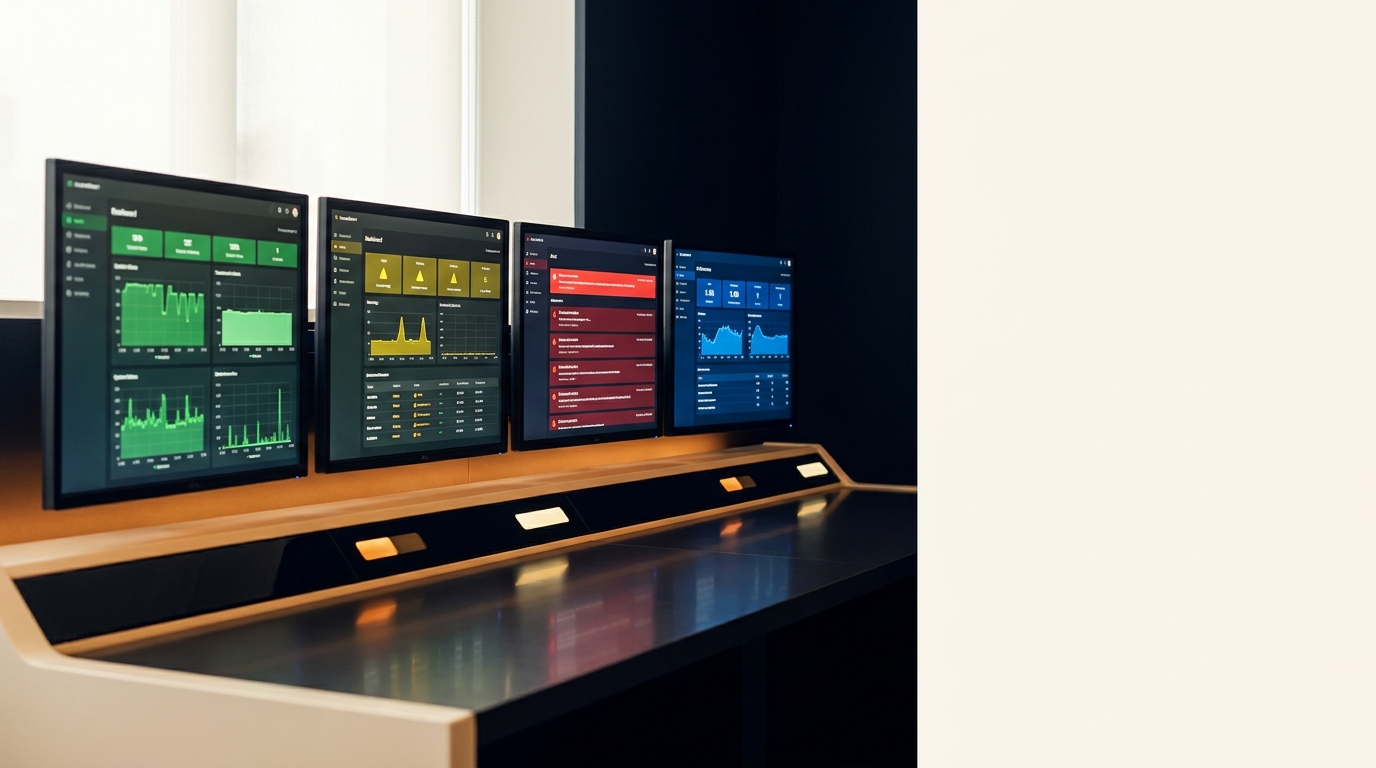
Les pannes d'automatisation silencieuses sont les tueurs cachés des implémentations IA. Pendant que tes tableaux de bord affichent des voyants verts et des temps de réponse corrects, tes workflows IA se dégradent tranquillement, prenant de plus en plus de mauvaises décisions qui coûtent de l'argent réel.
Les recherches de plusieurs plateformes d'observabilité en 2026 confirment ce que les propriétaires de PME vivent quotidiennement : le monitoring traditionnel détecte les problèmes d'infrastructure mais rate complètement les défaillances de qualité IA. Ton chatbot répond vite mais donne de mauvaises réponses. Ton traitement de factures roule bien mais classe mal les dépenses. Ton système de qualification de prospects traite chaque demande mais envoie des données pourries aux ventes.
La solution nécessite une approche de monitoring qui opère sur quatre niveaux distincts. Chaque niveau attrape différents modes de panne avant qu'ils se transforment en dommages d'affaires.
Niveau 1 : Monitoring d'infrastructure et de performance
Le niveau de base surveille les aspects mécaniques de tes systèmes IA. Temps de réponse, taux d'erreur, disponibilité API, et utilisation des ressources. Ça ressemble au monitoring APM traditionnel mais se concentre sur les métriques spécifiques à l'IA.
Les indicateurs clés incluent :
- Latence de réponse du modèle au-dessus des seuils de base
- Taux de timeout des API de fournisseurs et patterns de retry
- Pics d'utilisation de tokens qui suggèrent des processus emballés
- Épuisement des ressources mémoire et de calcul
- Échecs d'authentification et de limitation de débit
La plupart des équipes s'arrêtent ici parce que ces métriques leur semblent familières. Les outils existent, les tableaux de bord ont l'air professionnels, et les alertes se déclenchent de façon prévisible. Mais la santé d'infrastructure ne te dit rien sur la qualité des résultats.
Un workflow peut avoir un uptime parfait tout en produisant des résultats de plus en plus faux. Ton automatisation de factures pourrait traiter chaque document en moins de 2 secondes tout en classant systématiquement les frais de voyage comme des fournitures de bureau.
Niveau 2 : Détection de qualité et de dérive des résultats
Ce niveau évalue si ton IA produit de bonnes réponses, pas juste des rapides. Selon l'analyse 2026 de Confident AI, les plateformes d'observabilité qui priorisent l'évaluation scorent maintenant les résultats de production avec des métriques validées par la recherche pour la fidélité, la pertinence, la détection d'hallucinations, et la sécurité.
L'approche de prévention des pannes d'automatisation par monitoring nécessite un scoring de qualité continu :
- Dérive sémantique dans les réponses au fil du temps
- Dégradation de précision factuelle dans les systèmes basés sur la connaissance
- Taux d'hallucination dans les workflows de traitement de documents
- Précision de sélection d'outils pour les agents multi-étapes
- Pertinence des réponses au contexte utilisateur
La dérive de qualité arrive graduellement. Ton bot de service client passe lentement de utile à verbeux. Ton outil d'analyse de contrats devient plus conservateur, signalant des clauses routinières comme à haut risque. Le monitoring traditionnel n'attrape jamais ça parce que le système continue de fonctionner.
Implementer le monitoring de qualité veut dire établir des baselines pendant ton déploiement initial, puis tracker les déviations. Le Calculateur ROI IA aide à quantifier l'impact de coût quand la qualité se dégrade sans être détectée.
Niveau 3 : Validation de logique d'affaires et de processus
Le troisième niveau surveille si ton IA suit tes règles d'affaires correctement. Ça attrape les échecs dans les chaînes de raisonnement, l'utilisation inappropriée d'outils, et les violations de tes workflows définis.
Points de validation critiques :
- Adhérence des agents multi-étapes aux séquences de processus définies
- Reconnaissance appropriée des déclencheurs d'escalade
- Conformité avec les seuils d'approbation et limites d'autorisation
- Validation correcte des données et vérifications de cohérence
- Gestion appropriée des cas limites et exceptions
Considère une automatisation de comptes fournisseurs qui traite les factures parfaitement pendant des mois, puis commence soudainement à approuver des paiements au-dessus du seuil défini sans révision humaine. Le système fonctionne parfaitement d'un point de vue technique mais viole des contrôles d'affaires critiques.
Le monitoring de logique d'affaires nécessite des règles spécifiques au domaine qui reflètent tes exigences opérationnelles réelles. Les outils d'observabilité génériques ne peuvent pas fournir cette couche parce qu'ils ne comprennent pas ton contexte d'affaires.
Les équipes qui bâtissent un monitoring compréhensif trouvent souvent qu'établir ces règles de validation clarifie les lacunes dans leur implémentation IA initiale. Le Toolkit d'affaires IA inclut des frameworks pour mapper les exigences d'affaires aux points de contrôle de monitoring.
Niveau 4 : Suivi d'expérience utilisateur et de résultats
Le niveau supérieur mesure l'impact réel sur tes opérations d'affaires et l'expérience client. Ça ferme la boucle entre performance IA et résultats d'affaires.
Les métriques de résultats incluent :
- Taux de completion de tâches et scores de satisfaction utilisateur
- Efficacité des processus en aval après intervention IA
- Patterns de plaintes clients liés aux interactions IA
- Impact sur les revenus des décisions pilotées par IA
- Temps de résolution pour les enjeux signalés par IA
Un système de qualification de prospects pourrait scorer parfaitement sur les métriques techniques tout en créant de la friction qui fait fuir les prospects de haute valeur. L'automatisation de courriels pourrait maintenir une excellente deliverabilité tout en générant des réponses qui endommagent les relations clients.
Ce niveau nécessite de connecter ton monitoring IA aux KPIs d'affaires et systèmes de feedback client. La corrélation révèle souvent des modes de panne surprenants que le monitoring purement technique rate complètement.
Priorités d'implémentation par taille d'entreprise
Les travailleurs autonomes et petites équipes devraient se concentrer d'abord sur le monitoring de qualité Niveau 2. Le monitoring d'infrastructure compte moins quand tu fais rouler des workflows simples avec des critères de succès clairs. Commence avec des baselines de qualité de résultats et détection de dérive de base.
Les entreprises avec 10-50 employés ont besoin des Niveaux 1 et 2 implémentés avant d'élargir l'usage IA. À cette échelle, les points de défaillance unique créent un risque d'affaires significatif. Un monitoring d'infrastructure robuste prévient les pannes en cascade.
Les plus grandes organisations nécessitent les quatre niveaux parce que les pannes IA impactent plusieurs départements et points de contact client simultanément. La complexité demande une observabilité complète à travers les dimensions techniques et d'affaires.
Angles morts communs de monitoring
La plupart des implémentations échouent parce qu'elles monitorent les composantes individuelles au lieu des workflows bout-en-bout. Ton chatbot, processeur de documents, et intégration CRM pourraient chacun fonctionner parfaitement tout en produisant de terribles résultats combinés.
Autres lacunes fréquentes :
- Monitoring de fraîcheur et pertinence des données d'entraînement
- Suivi de dérive de prompt et contrôle de version
- Mesure de positionnement concurrentiel alors que les capacités IA évoluent
- Validation continue de conformité sécurité et confidentialité
- Évaluation de santé d'intégration avec les systèmes en aval
Les équipes sous-estiment aussi le facteur humain. Ton IA pourrait performer parfaitement pendant que ton staff développe des contournements qui bypassent complètement l'automatisation, rendant le monitoring inutile.
Bâtir ta stack de monitoring
Le paysage des plateformes d'observabilité en 2026 offre des outils spécialisés pour chaque niveau de monitoring. Datadog et New Relic gèrent le monitoring d'infrastructure. Confident AI, Arize Phoenix, et LangSmith se concentrent sur l'évaluation de qualité. La validation de logique d'affaires personnalisée nécessite souvent du développement interne.
La décision clé est d'intégrer plusieurs outils spécialisés ou de compromettre sur la profondeur pour des plateformes unifiées. Les équipes avec expertise technique préfèrent souvent les solutions best-of-breed. Les plus petites organisations bénéficient de plateformes consolidées malgré les limitations de fonctionnalités.
Commencer avec une approche niveau gratuit a du sens pour la validation initiale. Le Starter Pack inclut des templates de monitoring qui fonctionnent avec les outils d'observabilité populaires.
Le coût des pannes silencieuses
Les pannes d'automatisation silencieuses se composent au fil du temps. Un petit biais dans ton système de scoring de prospects pourrait coûter quelques prospects qualifiés par mois initialement. Après six mois, le pattern accumulé endommage significativement ton pipeline de ventes.
Les erreurs de traitement de documents créent des risques de conformité qui surgissent pendant les audits. La dégradation du service client se bâtit lentement jusqu'à ce que les critiques négatives explosent soudainement. Les erreurs d'automatisation financière s'accumulent en écarts comptables matériels.
L'approche de prévention des pannes d'automatisation par framework de monitoring IA traite ces enjeux comme des problèmes d'ingénierie avec des solutions mesurables plutôt que des mystères opérationnels qui nécessitent du travail de détective après que les dommages arrivent.
Dépasser le troubleshooting réactif
Le monitoring IT traditionnel attend que les systèmes brisent, puis se dépêche à les réparer. Les systèmes IA nécessitent un monitoring prédictif parce que la dégradation de qualité arrive graduellement et les impacts deviennent visibles seulement après des dommages d'affaires significatifs.
Selon la recherche de DoHost, le monitoring prédictif alimenté par IA peut réduire le Mean Time to Repair de 70% tout en prévenant des enjeux qui ne déclencheraient jamais les alertes traditionnelles.
Ce changement nécessite de changer comment les équipes pensent à la santé des systèmes IA. Au lieu de demander "Est-ce que ça roule?" la question devient "Est-ce que ça prend encore de bonnes décisions?" Le framework de monitoring doit répondre aux deux questions à travers les quatre niveaux.
L'investissement dans un monitoring compréhensif se paye par les pannes prévenues plutôt que par des temps de récupération plus rapides. Au moment où le monitoring traditionnel attrape les enjeux de qualité IA, les clients ont déjà vécu le service dégradé.
Prochaines étapes pour l'implémentation
Commence avec des mesures baseline à travers les quatre niveaux avant d'implémenter les alertes. Comprendre les patterns de comportement normal de ton IA prévient les alertes de faux positifs que les équipes apprennent rapidement à ignorer.
Priorise le monitoring pour tes workflows IA à plus haut impact d'abord. Le chatbot face client a besoin d'observabilité plus complète que les outils internes de classification de documents.
Établis des procédures d'escalade claires pour différents types de pannes. Les enjeux d'infrastructure pourraient auto-scaler les ressources pendant que la dégradation de qualité déclenche une révision humaine. Les violations de logique d'affaires pourraient pauser complètement le traitement automatisé.
Des cycles réguliers de révision de monitoring préviennent la fatigue d'alerte et assurent que ton framework évolue avec tes implémentations IA. Les révisions mensuelles de patterns d'alerte révèlent souvent des enjeux systémiques que les alertes individuelles ratent.
Si tu reconnais les symptômes de pannes IA silencieuses dans tes opérations actuelles, le service AI Snapshot fournit un audit complet de tes lacunes de monitoring et roadmap d'implémentation en 48 heures.
Articles connexes

L'angle mort des exceptions : pourquoi les travailleurs autonomes ne peuvent pas automatiser tant qu'ils n'ont pas mis à jour les 60 % de décisions qui vivent dans leur tête
Tu penses que ton workflow est simple. Puis l'automatisation frappe le premier cas particulier et tout tombe. Le problème, c'est pas l'outil. C'est le 60 % de ton processus qui existe seulement dans ta tête.

Le piège du calcul de ROI : pourquoi ton projet d'automatisation IA exige 5 $ de travail de processus pour chaque dollar dépensé en outils
Le chiffre de 280 % de retour sur investissement la première année, c'est réel. Mais presque personne ne parle des 5 $ de travail de processus requis pour chaque dollar dépensé en outils. Voici à quoi ressemble la vraie structure de coûts.

La taxe d'intégration : pourquoi les travailleurs autonomes québécois perdent 12 heures par semaine à transférer des données entre leurs outils IA et QuickBooks au lieu de servir leurs clients
Tu as acheté les outils IA. Tu as configuré QuickBooks. Et maintenant tu passes la moitié de ta semaine à faire le pont manuellement entre les deux. Voici pourquoi une automatisation déconnectée devient une taxe cachée sur ta capacité facturable.
Pour aller plus loin
Tu veux aller plus loin?
Obtiens le guide complet avec 25+ systèmes, gabarits et cadres prêts à utiliser.
Explorer le guide →