A Billion-Dollar Partnership Dies in 30 Minutes
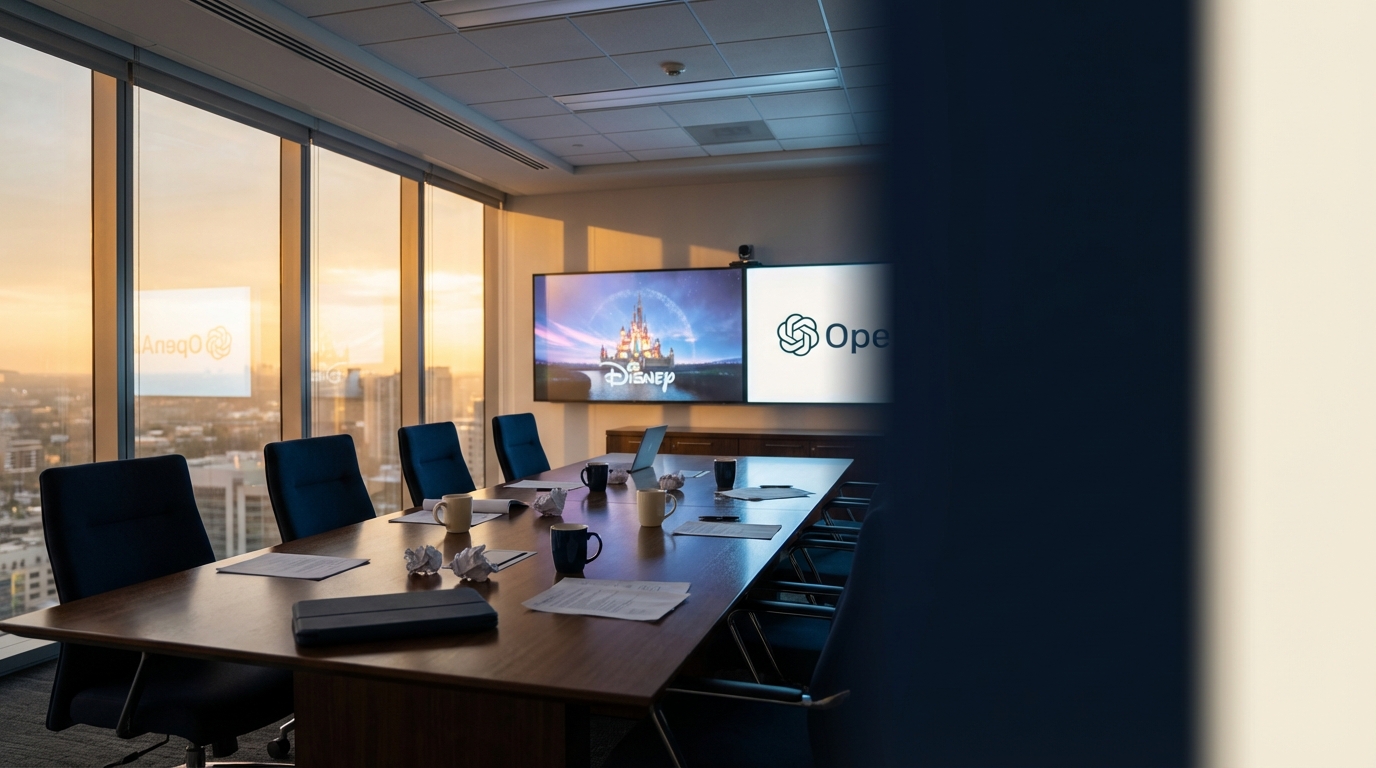
The entertainment industry's most ambitious AI collaboration collapsed in spectacular fashion this week. Disney's planned $1 billion investment in OpenAI and their three-year licensing agreement for Sora video AI came to an abrupt end when OpenAI announced the shutdown of their video generation platform.
According to Reuters, Disney teams were actively working on Sora projects Monday evening. Thirty minutes after that meeting ended, Disney executives received word that OpenAI was discontinuing the tool entirely. The timing couldn't have been more jarring.
The Deal That Almost Changed Entertainment
The partnership, announced in December according to multiple sources, represented a seismic shift in how major studios approached AI content creation. Under the three-year licensing agreement, Sora would have gained access to more than 200 masked, animated, or creature characters from Disney's vast catalog, including properties from Marvel, Pixar, and Star Wars.
This wasn't just another tech licensing deal. Disney was positioned to become a major OpenAI customer while making a planned $1 billion equity investment in the AI company, a deal that, according to subsequent reporting, never closed. The arrangement would have allowed Sora users to create AI-generated videos featuring iconic characters like Mickey Mouse and Yoda.
What Made This Partnership Unique
Most AI video tools operate in a legal gray area when it comes to copyrighted characters. Users can prompt these systems to generate content featuring popular characters, but the legal implications remain murky. Disney's deal with OpenAI would have legitimized this process for the first time at scale.
The licensing structure was carefully designed. According to the sources, fans would have been able to "start generating fan-inspired videos with Disney's multi-brand licensed characters in early 2026." This represented a controlled approach to user-generated content that protected Disney's intellectual property while embracing AI innovation.
For OpenAI, the partnership provided something equally valuable: mainstream legitimacy. Having Disney's blessing and character library would have differentiated Sora from competitors like Runway and Pika in a crowded AI video market.
The Sudden Shutdown
OpenAI's decision to shut down Sora caught the entertainment industry off guard. The timing raises questions about the platform's technical readiness and commercial viability. According to The Hollywood Reporter, "the closure of the app also raises questions for Disney, which inked a blockbuster deal to invest in OpenAI last December."
The abrupt nature of the shutdown suggests internal challenges at OpenAI that weren't visible to external partners. For a company to discontinue a product with such a high-profile partnership already in place indicates significant underlying issues.
Disney's Response: Relief or Disappointment?
Reports suggest Disney's internal reaction has been mixed. According to Variety, "Disney insiders are relieved that the Mouse" avoided potential complications. This reaction reveals the entertainment giant's internal reservations about diving headfirst into AI-generated content.
The relief makes sense from several perspectives. Disney has spent decades building brand trust and content quality standards. Allowing users to generate videos with Disney characters, even under licensing agreements, carries reputational risks that traditional content creation doesn't.
Technical Challenges in AI Video Generation
While the specific reasons for Sora's shutdown haven't been disclosed, the AI video generation space faces numerous technical hurdles. Maintaining consistent character appearance across different prompts, ensuring video quality meets professional standards, and scaling infrastructure for consumer use all present significant challenges.
The gap between impressive demos and production-ready products remains substantial in AI video. Even companies with OpenAI's resources and technical expertise struggle to deliver consistent, high-quality results at scale.
Market Implications
The collapse of this partnership sends ripples through both the AI and entertainment industries. For AI companies, it demonstrates that even the most promising partnerships can evaporate quickly. For entertainment companies, it highlights the volatility of betting on cutting-edge AI technology.
Other studios were likely watching Disney's moves closely. The failure of this high-profile collaboration may slow AI adoption across Hollywood as companies reassess the risks and readiness of AI video technology.
What This Means for AI Video's Future
The Disney-OpenAI collapse doesn't spell doom for AI video generation, but it does reset expectations. The technology clearly isn't ready for the mainstream consumer applications that partnerships like this would have enabled.
Companies like Runway, Pika, and others continue developing AI video tools, but they'll need to prove both technical capability and business model viability. The bar for enterprise partnerships has been raised significantly.
Lessons for AI Partnerships
This situation offers crucial insights for future AI collaborations:
Due Diligence Matters: Even established AI companies can face sudden product discontinuations. Partners need deeper visibility into technical roadmaps and business sustainability.
Platform Risk is Real: Building strategies around third-party AI platforms carries inherent risks. Companies need backup plans when foundational technologies disappear.
Timing is Everything: The AI industry moves fast, but not always in the expected direction. Market readiness and technical capability don't always align with business timelines.
The Path Forward
Disney's AI journey doesn't end with Sora's collapse. The company continues exploring AI applications across its operations, from theme park experiences to content creation workflows. However, this experience likely reinforces a more cautious approach to external AI partnerships.
For OpenAI, the Sora shutdown represents a significant strategic retreat. The company maintains its focus on language models and other AI applications, but the video generation market remains challenging territory.
Building Your AI Strategy
The Disney-OpenAI situation demonstrates why businesses need comprehensive AI strategies that don't rely on single vendors or technologies. Whether you're implementing AI automation in your operations or exploring creative AI applications, diversification and careful planning are essential.
If you're looking to build resilient AI workflows for your business, our AI Business Toolkit provides frameworks for evaluating AI vendors, managing platform risk, and developing sustainable AI strategies that won't leave you scrambling when the technology landscape shifts.